Embroidery Insights for Happy 346th Day of School 2021
A Design That Captures the School Year's Endearing Weirdness
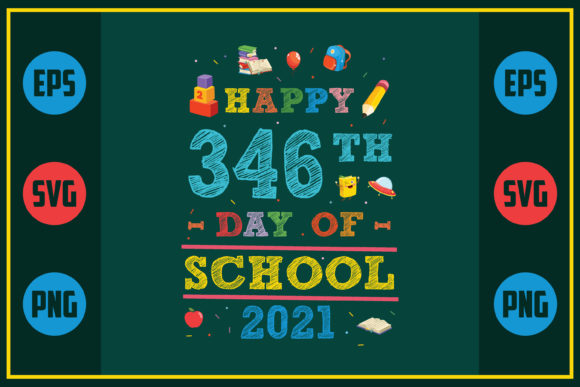
When you open the Happy 346th Day of School 2021 file, the first thing that strikes you is its personality. It’s not a generic celebration; it’s a specific, slightly offbeat nod to a very particular moment in the academic calendar. This creates an immediate mood of playful recognition. For anyone who has lived through a school year—parents, teachers, students—this design feels like an inside joke made visual. The layout, with its clear typography and celebratory theme, suggests a straightforward embroidery project, but its charm lies in that specificity. It’s not for the first day or the last; it’s for that random, almost-forgotten day in the middle, which makes it a surprisingly thoughtful design for personalized gifts.
From a designer’s perspective, the visual personality is friendly and clean. It doesn’t feel overcrowded or overly detailed, which is a huge advantage when translating a graphic into stitches. This simplicity means it naturally belongs to projects where clarity is key: a custom tote bag for a teacher, a cozy sweatshirt for a parent, or a decorative pillow cover for a classroom. I immediately pictured it on a soft, cotton apron for a homeschooling parent—a functional item that carries a personal message of endurance and celebration.
Where This Design Stitches Up Perfectly
Let’s walk through a real scenario. Imagine a client requests a personalized gift for a teacher who’s finishing a particularly long year. They want something unique, not a standard “Thank You.” You pull out this embroidery file. Its application is wonderfully versatile for the craft business and handmade product world. On a heavyweight cotton tote bag, the design would stitch out with excellent clarity, becoming a usable, appreciated piece of custom apparel. On a baby’s blanket or a child’s sweatshirt—a gift from a parent acknowledging the school year’s journey—it adds a layer of personal storytelling that mass-produced items lack.
For small shop merchandise, like embroidered patches, this design has strong potential. A patch with this sentiment could be applied to a backpack or a jacket, offering a modern, crafty alternative to a pin or sticker. In commercial embroidery settings, such as small-batch runs for a local PTA’s fundraiser, the clean layout ensures consistent results across multiple items, boosting customer trust in your professionalism. For Etsy sellers and digital product sellers, using this as a centerpiece in a printable mockup for a tea towel or apron creates an attractive listing that speaks directly to a niche audience—those looking for school-year themed holiday gifts or teacher appreciation presents.
Considerations Before You Hoop the Fabric
While the design’s simplicity is a strength, it demands a practical eye before you run the machine. The key considerations revolve around execution and context. First, the typography. Any text-based embroidery design requires attention to stitch density and letter spacing. On textured fabrics like some sweater knits, or on stretchy fabric, small letters can lose definition if the stabilizer isn’t robust. I would not recommend this for very small hoop sizes if the text is intricate; you need enough space to preserve the readability of “346th.”
Dark fabric presents another common challenge. The design’s mood is light and celebratory; on a black or navy background, you’ll need to choose thread colors with high contrast—bright whites or clean pastels—to maintain that cheerful visual appeal. On curved surfaces like caps, the linear layout might need slight adjustments in placement to follow the curve without distortion. And for products destined for frequent washing, like kitchen towels or kids’ apparel, a solid fill stitch construction will hold up better than very fine running stitch details.
Projects That Might Need a Second Thought
There are places where I’d use this design carefully, or perhaps not at all. Extremely delicate materials, like thin silk for a wedding gift accessory, might be overwhelmed by the density needed for clean text. Similarly, on items with lots of detailed corners or existing embellishments, like a heavily decorated boutique product, the design could compete rather than complement. Its strength is as a standalone, focused statement. It also might not suit tiny lettering applications, like on a small charm or a piece of jewelry; the sentiment needs space to be appreciated.
This brings us to visual appeal and stitching clarity. The design’s value is tied directly to its crispness. A blurred or puckered stitch outcome would undermine the cleverness of the message. For brand consistency in a craft business that focuses on school-themed items, this file could be a great asset, but only if the finished product looks precise and intentional. That precision directly affects buyer engagement; a well-executed embroidered item feels more giftable and worthy of a higher perceived value.
Practical Notes from the Embroidery Desk
Before you commit this to a client’s project or your own shop inventory, here is my standard checklist. Always test the design on scrap fabric first. Use the same material and weight as your final project. This reveals any issues with stitch density or thread tension. Check thread color contrast against your final background by laying physical threads on the fabric; digital previews can deceive.
Review stitch density in your software preview. Are there any overly dense areas that might cause puckering? Confirm hoop size required for clean execution. Inspect small details like the numerals; ensure they will be distinct. It’s also wise to test it in black and white mockups to see how it reads without color, and to compare light and dark fabric backgrounds digitally to plan your thread palette.
Always use proper stabilizer for your chosen fabric. This is non-negotiable for maintaining the design’s integrity. Crucially, check whether the design works for both personal and commercial projects. Since your purchase includes a digital file, confirm licensing before selling finished items or digital products. The provided description states it is a digital download with an SVG file, but it does not specify license terms. You must verify the usage rights yourself to ensure your commercial embroidery or digital product sales are legitimate.
Finally, consider the product’s lifecycle. This design, as part of the Crafts and Graphics category, is inherently tied to a specific year—2021. For ongoing craft business use, you might adapt the year for current projects, if the license permits modifications. Its true power is in its specificity, making it a perfect personalized gift for someone reflecting on that particular school year. In your hands, as an embroidery designer, it transforms from a digital asset into a tangible piece of connection—a stitched reminder of a day that usually goes unnoticed, now celebrated with every thread.